
How Much Does It Cost to Install a Sprinkler Irrigation System? Ultimate Guide
Are you thinking about installing a sprinkler irrigation system but wondering how much it will cost? Knowing the price upfront can help you plan your budget and avoid surprises.
Whether you want to keep your lawn green or make watering your garden easier, understanding the costs involved is key. You’ll discover what factors affect the price, what you can expect to pay, and how to get the best value for your money.
Keep reading to find out exactly how much installing a sprinkler system will set you back—and how it can save you time and effort in the long run.
Sprinkler System Types
Installing a sprinkler irrigation system helps keep your garden green and healthy. The cost depends on many things like the type of system and your yard size. Understanding different sprinkler system types can help you choose the right one. This guide explains common types of sprinkler systems and their features.
Fixed Spray Sprinklers cover small to medium areas well. They spray water in a fixed pattern and are good for flower beds and small lawns. These sprinklers are simple and usually cost less to install.
Rotary Sprinklers rotate to cover larger areas. They spray water in a circular motion and work well for big lawns or fields. These systems may cost more but save water by covering large zones efficiently.
Drip Irrigation Systems deliver water directly to plant roots. This system uses tubes and emitters and is very water-efficient. It is best for gardens with many plants or vegetables.
Soaker Hoses slowly release water along their length. They are easy to install and good for garden rows or shrubs. These hoses cost less but need more manual setup.
Sprinkler Type | Best For | Cost Range | Water Efficiency |
Fixed Spray | Small to medium lawns | Low | Moderate |
Rotary | Large lawns and fields | Medium to High | High |
Drip Irrigation | Gardens and vegetable beds | Medium | Very High |
Soaker Hose | Garden rows and shrubs | Low | Moderate |
Factors Affecting Installation Costs
Installing a sprinkler irrigation system helps keep your lawn and plants healthy. It saves time and water. The cost varies a lot. Many factors affect the final price. Knowing these factors helps you plan your budget well.
Size Of The Area
Larger areas need more pipes and sprinklers. This makes the cost higher. Small yards cost less to cover. A bigger garden means more parts and labor. Usually, the price grows with the size.
Type Of Sprinkler System
There are different sprinkler systems:
- Pop-up sprinklers that rise when watering.
- Drip irrigation for slow water to plants.
- Rotary sprinklers that spin to cover big areas.
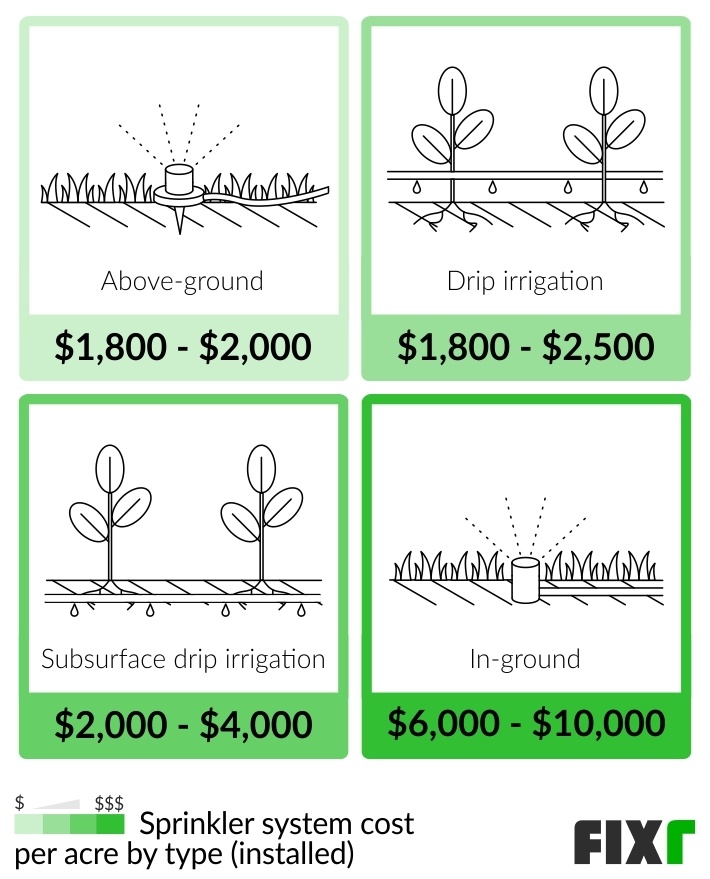
Each type has a different cost. Pop-up systems are common and usually cheaper. Drip systems can be more costly but save water.
Soil And Terrain
Hard or rocky soil makes digging harder. This can increase labor costs. Flat land is easier to work on. Slopes may need special parts or extra work. Soil type affects the installation price.
Water Source And Pressure
Strong water pressure helps sprinklers work well. Weak pressure may need pumps or upgrades. Connecting to a water source can cost more if far away. The water system condition affects the price.
Materials And Equipment Quality
Higher quality pipes and sprinklers last longer but cost more. Cheaper materials save money upfront but may break sooner. Good equipment can reduce maintenance costs later. Choose materials based on budget and needs.
Labor Costs
Professional installation usually costs more than DIY. Experts work faster and better. Labor rates depend on your location. Some places have higher wages, raising total costs. Labor is a big part of the price.
Additional Features
Extra options can raise the cost:
- Automatic timers to control watering times.
- Rain sensors to stop watering when it rains.
- Smart controllers that connect to phones.
These features add convenience but increase the price.
Material Expenses
Installing a sprinkler irrigation system helps keep your garden or lawn green. It saves time and water. Many people want to know the cost of this installation. The price depends on many things. One of the main parts is the material expenses. Understanding these costs helps you plan your budget well.
Pipes And Tubing
Pipes and tubing are needed to carry water to the sprinklers. The cost depends on the type and length.
- PVC pipes are common and affordable.
- Polyethylene tubing is flexible and easy to install.
- Longer pipes mean higher costs.
Sprinkler Heads
Sprinkler heads spread water evenly. There are different types:
- Fixed spray heads cover small areas.
- Rotary heads cover larger zones.
- The price varies by brand and quality.
Valves And Controllers
Valves control water flow to each zone. Controllers automate watering times.
- Manual valves cost less but need hand operation.
- Automatic valves cost more but save effort.
- Controllers range from simple to smart models.
Additional Materials
Other items add to the cost but are important.
- Fittings and connectors join pipes and parts.
- Backflow preventers keep water safe.
- Filters stop dirt from clogging the system.
Material Cost Summary
Material | Typical Cost Range (USD) |
Pipes and Tubing | $0.50 – $3.00 per foot |
Sprinkler Heads | $5 – $30 each |
Valves | $10 – $50 each |
Controllers | $50 – $300 |
Fittings and Connectors | $0.25 – $5 each |
Backflow Preventers | $70 – $150 |
Filters | $20 – $100 |
Labor Charges
Installing a sprinkler irrigation system helps keep your garden green. Costs vary based on system size, parts, and labor. Knowing these costs helps plan your budget well. This guide explains the main expense: labor charges.
What Labor Charges Include
Labor charges cover the work done by professionals. This work includes digging trenches, laying pipes, and setting up sprinklers. Electric and control system installation also adds to labor costs.
Average Labor Costs
Labor costs depend on location and project size. Typically, labor fees range between $30 and $50 per hour. Most installations take 8 to 16 hours to complete.
Factors That Affect Labor Costs
- Project size: Larger areas need more work.
- Soil type: Hard soil takes longer to dig.
- System complexity: More zones mean more installation time.
- Labor availability: Costs rise if workers are scarce.
- Local rates: Prices vary by city or state.
Cost Comparison Table
Project Size | Estimated Hours | Labor Cost Range |
Small (up to 1,000 sq ft) | 8 – 10 hours | $240 – $500 |
Medium (1,000 – 5,000 sq ft) | 10 – 14 hours | $300 – $700 |
Large (5,000+ sq ft) | 14 – 16 hours | $420 – $800 |
Additional Equipment Costs
Installing a sprinkler irrigation system needs more than pipes and sprinklers. Some extra tools and parts are needed. These can add to the total price. Knowing these costs helps plan your budget well.
Controllers And Timers
Controllers automate the watering schedule. They save time and water. Basic models cost less, while smart controllers are pricier.
- Basic controller: $30 – $100
- Smart controller: $150 – $300
Valves
Valves control water flow to different zones. Good quality valves last longer and work better. Prices vary by size and type.
- Manual valve: $10 – $30
- Automatic valve: $25 – $75
Backflow Preventers
Backflow preventers stop dirty water from going back into clean water supply. They are needed by law in many places.
- Standard backflow preventer: $50 – $200
Filters
Filters keep dirt out of the system. This protects sprinklers and pipes from clogging. Prices depend on size and type.
- Simple filter: $20 – $50
- Advanced filter: $60 – $150
Additional Materials
Other small parts are needed. These include connectors, fittings, and pipe glue. Though cheap alone, these costs add up.
Material | Average Cost |
Connectors | $5 – $15 each |
Fittings | $3 – $10 each |
Pipe glue | $7 – $15 per can |
Maintenance And Operating Costs
Installing a sprinkler irrigation system is only the first step. To keep it working well, you must spend money on maintenance and operation. These costs can add up over time. Knowing these expenses helps plan your budget better. It also helps avoid surprises later.
Regular Maintenance
Sprinkler systems need regular checks to work properly. This includes inspecting pipes, sprinkler heads, and valves for damage or leaks. Cleaning clogged nozzles is also important to keep water flow steady. Usually, maintenance happens once or twice a year.
Costs for regular maintenance can vary. Hiring a professional might cost between $100 and $300 per visit. Doing it yourself costs less but takes time and effort.
Water Costs
Water is the main operating expense of a sprinkler system. The cost depends on your local water rates and how much you use. Sprinklers use water daily or several times a week in dry months.
To save money, use a timer and water early in the morning or late in the evening. This reduces water loss from evaporation.
Electricity Costs
Electricity powers the sprinkler system pump and timer. The cost depends on your local electricity rates and how long the system runs. Pumps usually run for a short time each day.
Average monthly electricity cost for a sprinkler system is about $5 to $15.
Repair Costs
Repairs happen when parts break or wear out. Common repairs include fixing leaks, replacing broken sprinkler heads, and repairing valves. Costs vary based on the problem and parts needed.
Small repairs might cost $50 to $150. Major repairs or part replacements can cost more.
Summary Of Maintenance And Operating Costs
Expense | Typical Cost | Notes |
Regular Maintenance | $100 – $300 per visit | Once or twice a year; professional service |
Water Costs | Varies by usage | Use timers to save water |
Electricity Costs | $5 – $15 per month | Depends on pump run time |
Repair Costs | $50 – $150+ | Depends on damage and parts |
Cost Comparison By Property Size
Installing a sprinkler irrigation system helps keep your lawn green and healthy. The cost depends on many things like the size of your property and the type of system. Knowing the price range can help you plan your budget better. This guide shows how costs change by property size.
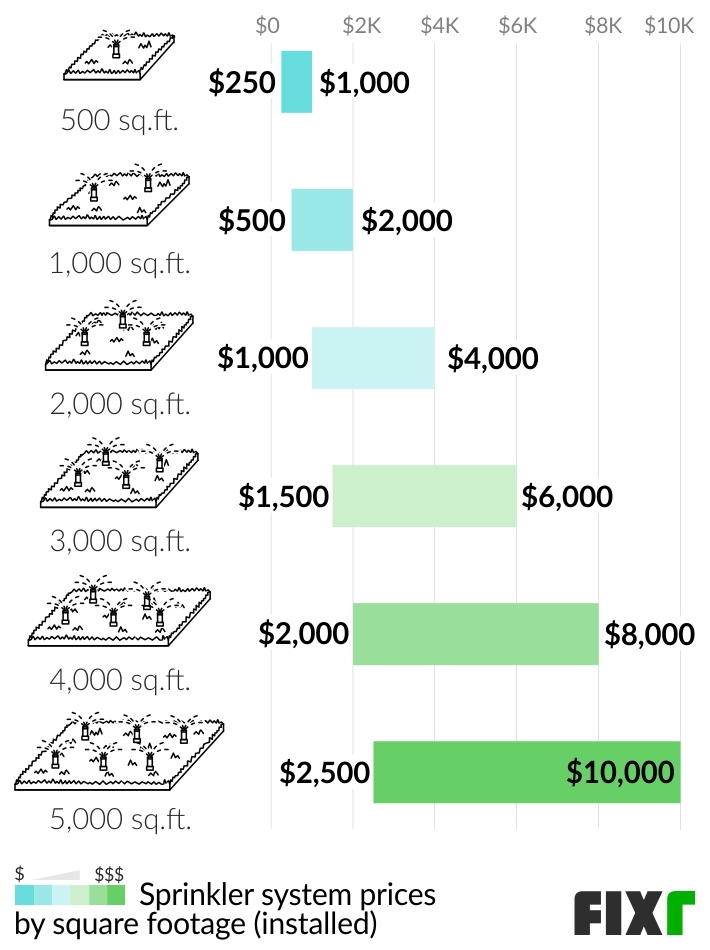
Different property sizes need different amounts of materials and work. Smaller yards cost less because they need fewer sprinkler heads and pipes. Larger properties use more parts and take longer to install, so costs go up.
Property Size | Average Cost Range | What Affects Cost |
Small (Up to 1,000 sq ft) | $500 – $1,200 | Few sprinkler heads, simple layout |
Medium (1,000 – 5,000 sq ft) | $1,200 – $3,000 | More zones, more pipes and heads |
Large (5,000 – 10,000 sq ft) | $3,000 – $6,000 | Complex design, multiple zones |
Extra Large (Over 10,000 sq ft) | $6,000 and up | High material and labor costs |
Choosing the right system size saves money. Planning your property layout helps get accurate cost estimates. Ask for quotes from local installers to compare prices.
Frequently Asked Questions
How Much Does A Sprinkler Irrigation System Cost To Install?
The cost usually ranges from $1,500 to $4,000 depending on the system size. Larger yards and more zones increase the price. Labor and materials also affect the total cost.
What Factors Affect The Installation Cost Of Sprinkler Systems?
Soil type, yard size, and the number of zones impact costs. Complex designs or uneven terrain need more work. Quality of materials also changes the price.
Can I Save Money Installing A Sprinkler System Myself?
Yes, DIY installation can save labor costs, which are 30-50% of total price. But mistakes may cause leaks or poor coverage. Basic plumbing skills and tools are needed.
Conclusion
Installing a sprinkler irrigation system costs vary by size and features. Basic systems are cheaper but cover less area. More advanced setups need a bigger budget. Think about long-term water savings and plant health benefits. Planning your layout carefully can save money later.
Hiring a professional ensures the system works well. Compare quotes before choosing a service. A good sprinkler system makes watering easier and more efficient. Choose what fits your garden and wallet best.
Leave A Comment