
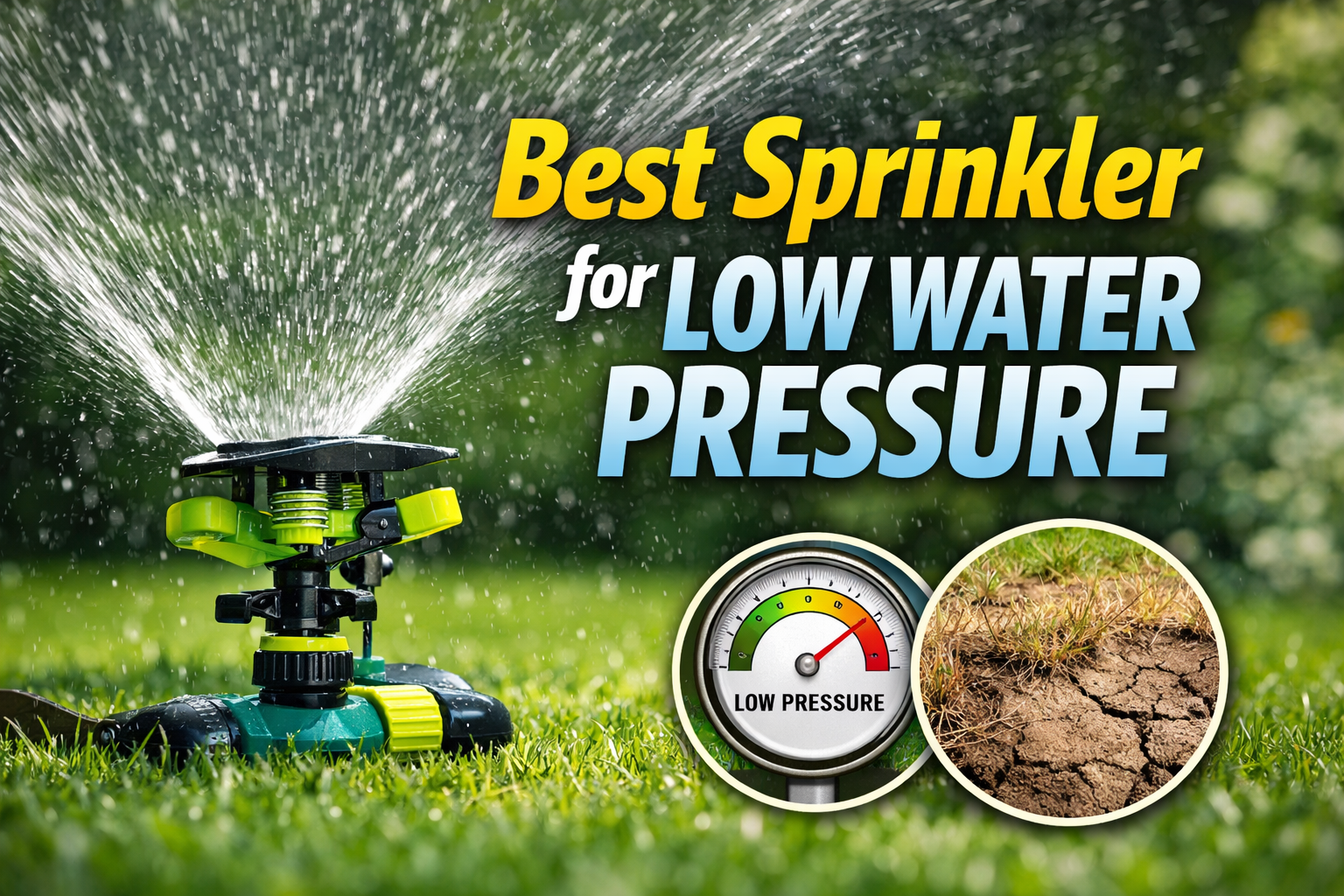
Best Sprinkler for Low Water Pressure
Keeping your Plants healthy is like a challenge if your lawn is suffering from low water pressure. Standard Sprinklers Can’t handle the low water pressure resulting in poor coverage, overwatering and dry spots. But if you have sprinklers that works with low water pressure, you can change the game. Low pressure sprinklers are specifically build to handle Weak pressure and giving your plants, flowerbeds and veggies the water they actually need. That’s why in this article, we”ll tell you about the best sprinklers for low water pressure and how to choose the right type for your garden size and watering needs. Lets start
Cause of Low Water Pressure
When the water from your taps and Sprinklers does not come out as it should, indicates that pressure in your pipe is low. There can be various reasons for weak water flow such as clogged pipes, old pumps or plumbing systems, and even long distanced water supply. To find out the exact cause either you should call an irrigation system installation company or a plumber.
Best Types of Sprinklers for Low Water Pressure
Spray Sprinklers (Fixed)
Spray sprinklers are one of the best options for low water pressure systems. They use fixed spray nozzles to release water in a controlled, even pattern without any rotation or movement. Because they require minimal pressure to operate, they provide reliable coverage for small lawns, flower beds, and garden areas. Spray sprinklers reduce water waste, prevent runoff, and ensure plants receive consistent moisture even when water flow is weak.
Stationary / Fixed Sprinklers
Stationary or fixed sprinklers remain in one position and water a defined area using a preset spray pattern. With no moving parts, they perform well under low water pressure and are easy to install and maintain. These sprinklers are ideal for targeted watering, small gardens, and patches of lawn that need steady moisture without wide reach or complex coverage.
Drip Sprinklers for Low Water Pressure
Drip sprinklers are ideal for gardens with low water pressure, as they deliver water slowly and directly to the plant roots. Unlike spray or rotary sprinklers, they do not rely on high pressure to function, making them highly efficient for watering flower beds, vegetable patches, shrubs, and potted plants. By minimizing evaporation and runoff, drip systems conserve water while ensuring consistent moisture for healthy growth. With no moving parts, they are low-maintenance, cost-effective, and perfect for areas where water supply is weak or irregular, providing precise and reliable irrigation every time.
Additional Tips to Improve Water Pressure
1. Always Keep your sprinkler heads clean as dirt and debris can block water flow. So make sure to clean them regularly.
2. Check your hoses and pipes timely for leaks. Even a small leak can disrupt the water pressure dramatically.
3. Long hoses reduce pressure by increasing resistance. Switching to a shorter or wider hose can allow more water to reach your sprinkler.
4. To enjoy proper water pressure every time you turn on sprinklers, try to watering your lawn early morning or late evening as fewer household use water during this time period.
5. Installing a Booster pump can significantly improve flow and provide you ample pressure anytime.
Conclusion
If you want a healthy lawn, you need to watering each and every section of your space equally. To do this you need sprinklers that can work with even low water pressure. By reading above information you can understand how each type of sprinkler works then you can make the right decision. If your property needs a more reliable long-term solution, professional Sprinkler System Installation Natick services can help optimize pressure, layout, and coverage.
Leave A Comment